Oct 22, 2026
EMI Shielding for Displays: Types and How to Choose
 What is EMI Shielding?
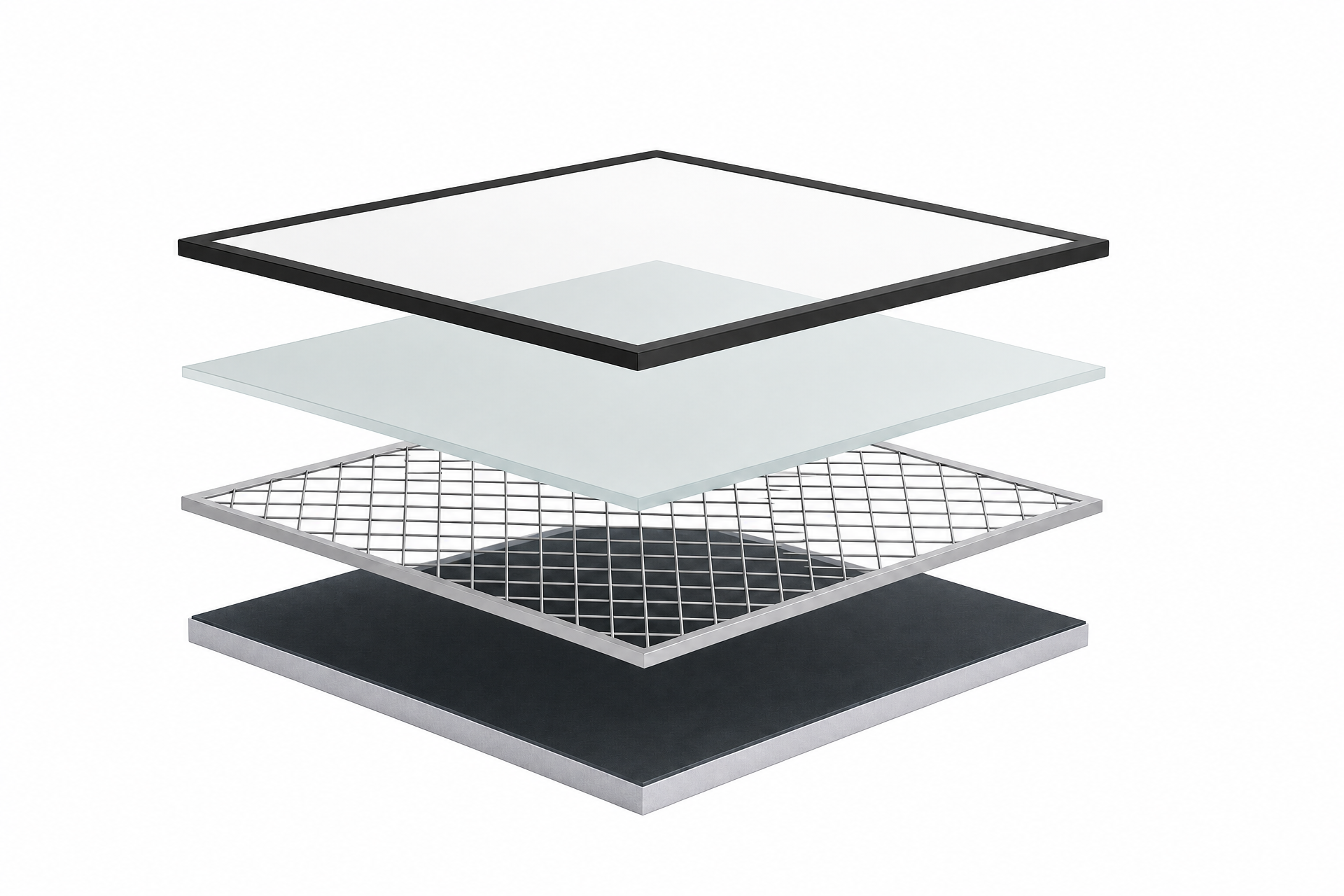
EMI (electromagnetic interference) shielding reduces unwanted electromagnetic interference that can disrupt electronic devices and cause malfunctions. This interference can originate from within a product or from external sources. For displays, shielding must also maintain optical transparency, making EMI shielding a particular challenge for display applications.
Why is EMI Shielding Important?
Preventing Device Malfunctions
Electromagnetic interference can cause touch malfunctions, display noise, and other performance issues. EMI shielding helps reduce unwanted interference and protect the reliable operation of electronic systems.
Ensuring Regulatory Compliance
Displays used in commercial, medical, and military applications may need to meet applicable electromagnetic compatibility standards and regulatory requirements. EMI shielding can help reduce electromagnetic emissions and susceptibility to interference, supporting compliance efforts and certification testing.
Enhancing Security and Preventing Information Leakage
In security-sensitive environments, such as military facilities, government agencies, and financial institutions, electromagnetic emissions can potentially expose sensitive information. EMI shielding can help reduce this risk as part of a broader electromagnetic security strategy.
Three Types of Transparent EMI Shielding
Silver Coating
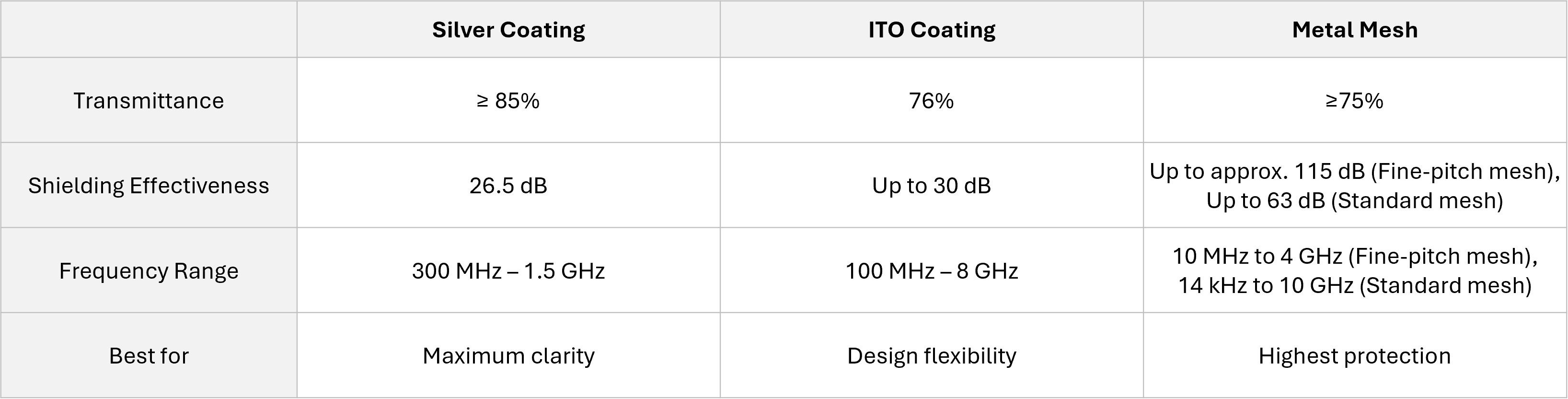
Silver is one of the most conductive metals, so a thin silver-based conductive layer can provide effective EMI shielding with high visible light transmission. Its continuous coating structure can help preserve display brightness and image clarity without the visible grid pattern associated with mesh structures. Silver coating is well suited to applications where optical performance is the top priority.
ITO Coating
ITO (Indium Tin Oxide) coating combines optical transparency and electrical conductivity, making it widely used material in electronic components, including touch panels and EMI shielding applications. ITO can be applied to glass or film substrates, and finished parts can be customized through cutting and adding adhesive tape, depending on the product design. It is a suitable option when substrate compatibility and design flexibility are important.
Metal Mesh
Metal mesh uses a fine grid of conductive metal, typically copper, to reduce electromagnetic interference while allowing light to pass through the open areas. Its low sheet resistance can support effective EMI shielding across a broad frequency range, depending on the mesh design and product specifications. The mesh may also be treated to improve oxidation resistance and can be integrated into glass or film substrates. Metal Mesh is well suited to applications requiring high EMI shielding effectiveness while maintaining optical transparency.

Choosing the Right Option for Your Application
Each EMI shielding method offers different advantages depending on the application requirements. The following are typical applications for each option.
Silver Coating
- Industrial displays requiring high optical clarity and EMI shielding.
- Control room and instrumentation displays where image clarity is critical.
- Communication and electronic equipment displays requiring clear visual performance.
ITO Coating
- Touch-enabled displays requiring a transparent conductive layer.
- Transparent windows and sensor components requiring optical transparency and electrical conductivity.
- Medical, cockpit, and automotive displays, depending on specific shielding and optical requirements.
Metal Mesh
- Aerospace and defense displays requiring effective EMI shielding.
- Medical equipment displays requiring electromagnetic protection.
- Display applications requiring customized shielding performance through mesh design.
BSI EMI Shielding
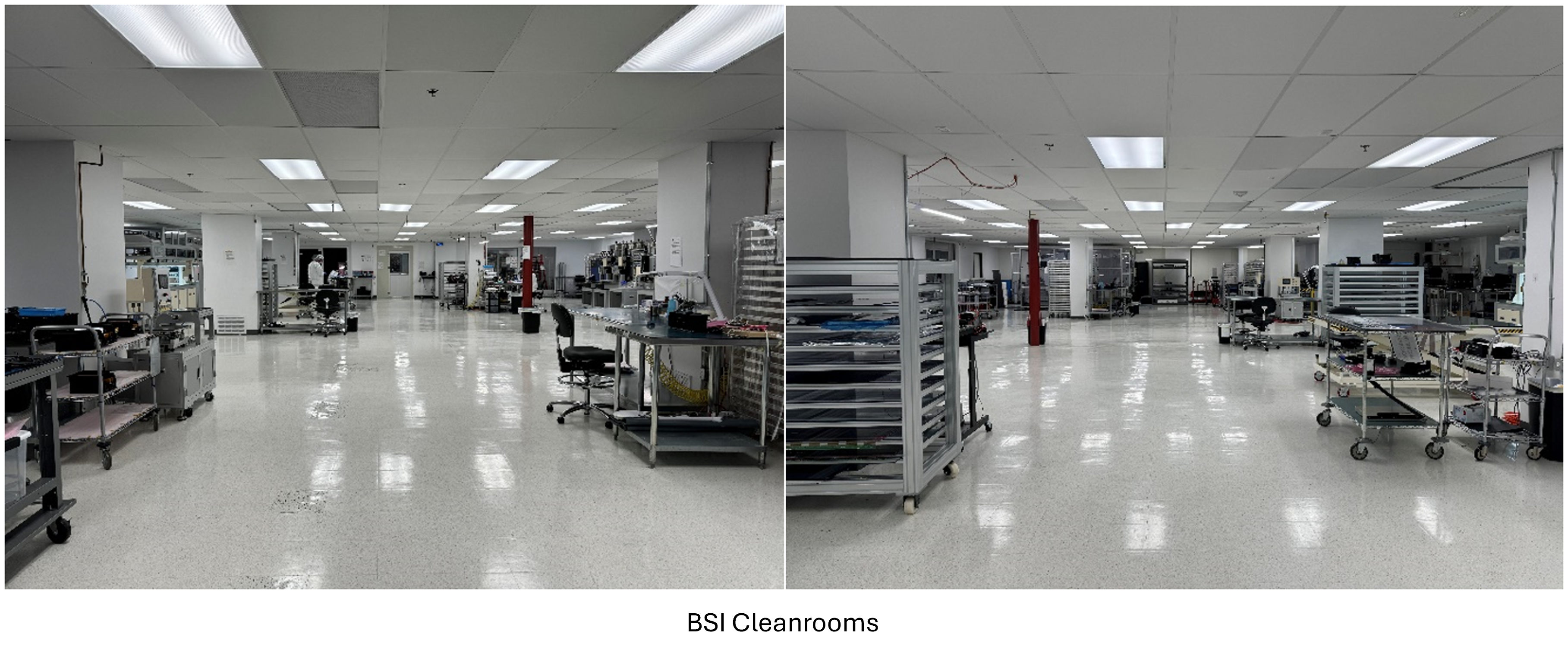
Bi-Search International (BSI) offers silver coating, ITO coating, and metal mesh EMI shielding solutions tailored to your application requirements. Our cleanroom facilities and dedicated shielding effectiveness testing equipment support customized solutions designed to meet your specific display requirements.